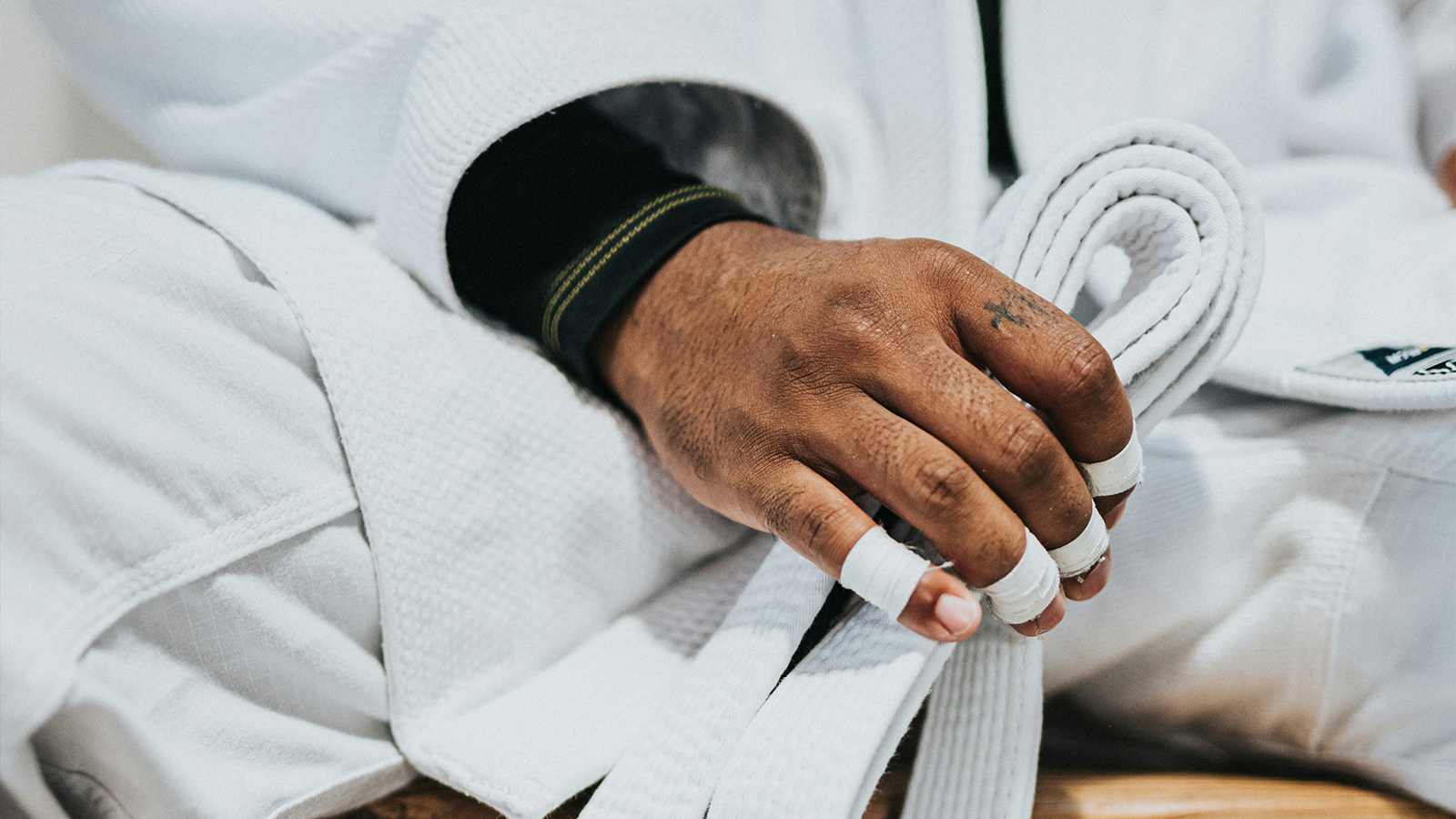
Most martial artists have a complicated relationship with pain. The culture celebrates toughness. Tapping out to an injury feels like weakness. "Just train through it" is advice handed down from instructor to student like it's wisdom.
Sometimes it is. A lot of the time, it's how a minor tweak becomes a six-month layoff.
The Two Kinds of Pain on the Mat
There's a distinction worth making that gets blurred in most dojo culture: discomfort and damage.
Discomfort is normal. Your cardio limits, your muscles burning, the general physical protest of your body being pushed — this is the training stimulus. You adapt to it. This is supposed to happen.
Damage is different. A shoulder that pops when you post on it. A knee that swells overnight. A rib that catches every time you breathe in during a hard roll. These aren't training stimuli. These are signals that something is being harmed, and continuing to load that structure is making it worse, not better.
The problem is that the culture of "train through it" doesn't always distinguish between the two. And when you don't distinguish between them, you accumulate damage the way compound interest works — slowly, then all at once.
The Pattern That Ends Careers (and Belts)
Here's how it usually goes. A practitioner rolls too hard on a tender elbow. It's sore but manageable. They train the next day because they don't want to miss class. The elbow gets a little worse. They train the day after because they've got a stripe test coming up. Three weeks later they can't straighten their arm and they're out for two months.
Two months is not a small thing. At two sessions per week, that's 16 classes missed. Techniques not drilled. Sparring rounds not taken. The mat has a long memory — gaps in training set you back further than the time suggests, because you're not just losing fitness, you're losing the feel of the game.
The practitioners who last decades on the mat — who hit black belt and keep going — are almost universally the ones who learned to manage their bodies intelligently. Not by avoiding hard training. By knowing the difference between pushing through and breaking down.
Why You Need to Actually Track It
The human body is surprisingly good at normalizing pain. An injury that would have alarmed you in month one becomes background noise by month six. You adapt your game around it unconsciously — avoiding certain positions, pulling guard more often, skipping the shots that hurt — and you stop noticing the compensation patterns.
This is how small, manageable injuries become structural problems. And it's almost entirely invisible without a record.
When you track your injuries — even simply, even informally — a few things happen:
You see the accumulation. A single note about a tender shoulder means nothing. A dozen notes over three months means you've been loading a compromised joint for twelve weeks and it's time to actually address it.
You spot the triggers. Hard sparring days followed by aching knees. Drilling takedowns on hard mats followed by hip tightness. These patterns exist in your training — you just can't see them without data.
You make better decisions. "Should I spar today?" is a much easier question when you can see that you've already trained four days this week and your shoulder has been flagged for two of them. The data takes the ego out of the decision.
You recover faster. Knowing when an injury started, how it progressed, and what made it better or worse gives you and any practitioner working with you a real picture to work from instead of vague recollections.
What to Actually Log
You don't need to become a sports medicine professional. Five fields cover almost everything worth knowing:
- What hurts and where — be specific. "Left knee, medial side" is more useful than "knee stuff."
- When it started — the date, even approximate
- What makes it worse — specific movements, positions, or training loads
- What makes it better — rest, ice, specific mobility work
- Training impact — is it affecting what you can do, and how much?
Update it when something changes. That's it. Two minutes, maybe less.
Over time this record becomes one of the most valuable things you have — a complete picture of how your body responds to training, what to watch for, and what you've successfully recovered from before.
The Long Game
Martial arts is a long game. The people who get the most out of it aren't the ones who trained the hardest in any given month — they're the ones who kept showing up, year after year, because they stayed healthy enough to keep training.
Your injuries are data. Start treating them that way.